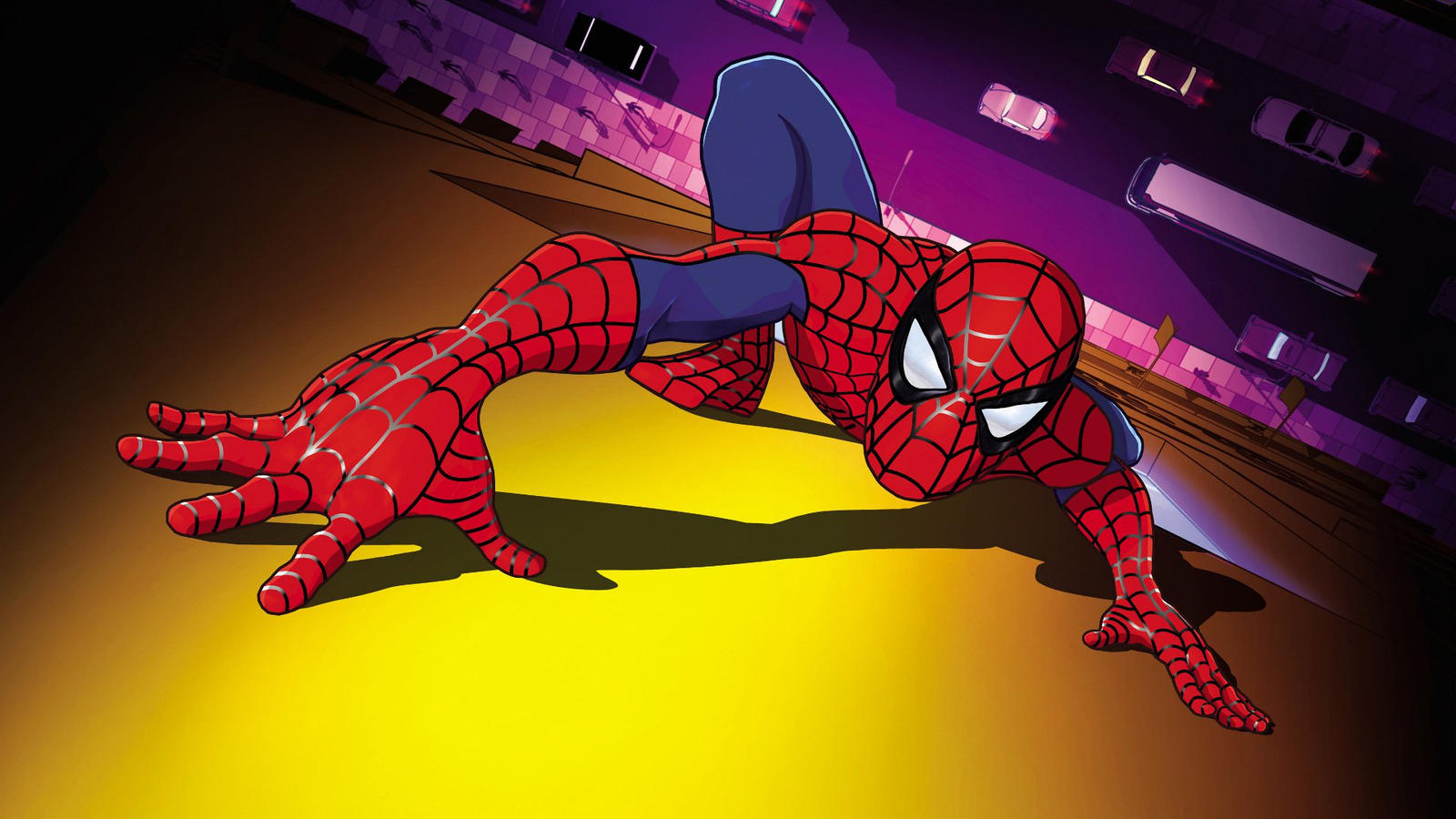
Spider-Man: The New Animated Series - A CGI Experiment
Introduction
“Spider-Man: The New Animated Series” is a unique entry in Spider-Man’s animated history. Airing on MTV in 2003, this series was notable for being the first Spider-Man series to use CGI animation. Created as a sequel to Sam Raimi’s 2002 “Spider-Man” film, the series attempted to bridge the gap between animation and live-action. While it only lasted for 13 episodes, “Spider-Man: The New Animated Series” remains a visually groundbreaking experiment that pushed the boundaries of animated superhero storytelling.
Production Background
Development
- Film Connection - The series was developed as a sequel to Sam Raimi’s 2002 “Spider-Man” film
- MTV Partnership - Produced in partnership with MTV, marking Spider-Man’s first appearance on the network
- Creative Team - Features contributions from Brian Michael Bendis, a renowned Spider-Man comic book writer
- Animation Studio - Animated by Mainframe Entertainment, known for their work on “ReBoot” and “Spider-Man Unlimited”
- Air Dates - The series aired from July 11 to September 12, 2003, for a total of 13 episodes
Animation Style
- Full CGI - The series was entirely computer-animated, a first for a Spider-Man series
- Motion Capture - Used motion capture technology to create more realistic character movements
- Visual Style - Attempted to mimic the visual style of the 2002 film, with detailed character models and environments
- Action Sequences - Dynamic action sequences that took advantage of CGI’s capabilities
Storytelling Approach
Series Premise
- Sequel to the Film - Set shortly after the events of the 2002 “Spider-Man” film
- College Setting - Peter Parker is now a college student at Empire State University
- New Supporting Cast - Features new supporting characters, including Harry Osborn and Mary Jane Watson
- New Villains - Introduces new villains not seen in the film, including Silver Sable, Prowler, and Electro
Notable Story Arcs
- College Life Arc - Explores Peter’s adjustment to college life while maintaining his dual identity
- Relationship Arc - Delves into Peter’s complicated relationship with Mary Jane
- Villain Introduction Arc - Introduces new villains and their conflicts with Spider-Man
- Identity Crisis Arc - Peter struggles with the burden of his dual identity
- Final Showdown - The series concludes with a dramatic showdown that sets up potential future storylines
Mature Themes
- College Life - Explores the challenges of college life, including relationships, academics, and social pressures
- Romantic Relationships - Features more mature romantic relationships than previous Spider-Man series
- Moral Dilemmas - Presents Spider-Man with complex moral dilemmas
- Consequences - Emphasizes the consequences of Spider-Man’s actions
The Cast of Characters
Peter Parker/Spider-Man
- Characterization - Peter Parker is portrayed as a college student still adjusting to his role as Spider-Man
- Voice Acting - Neil Patrick Harris provided the voice for both Peter Parker and Spider-Man, delivering a nuanced performance
- Dual Identity - The series explores the strain his dual identity puts on his college life and relationships
- Growth - Shows Peter’s continued growth as both a person and a superhero
Supporting Characters
- Mary Jane Watson - Peter’s girlfriend, portrayed as a college student with her own aspirations
- Harry Osborn - Peter’s best friend, struggling with his father’s legacy and his relationship with Mary Jane
- Kirsten McDuffie - A new character created for the series, Peter’s classmate and friend
- J. Jonah Jameson - The gruff editor of the Daily Bugle, who continues to smear Spider-Man
- Aunt May - Peter’s supportive aunt who occasionally appears in the series
Villains
- Silver Sable - A mercenary who clashes with Spider-Man
- Prowler - A former classmate of Peter’s who turns to crime
- Electro - A former Oscorp employee with electrical powers
- Lizard - Curt Connors, Peter’s professor who transforms into a monstrous creature
- Shikata - A ninja assassin who becomes obsessed with fighting Spider-Man
Cultural Context
The Early 2000s Landscape
- MTV Audience - Designed to appeal to MTV’s target audience of teenagers and young adults
- Post-Film Hype - Aired during the height of Spider-Man film hype, following the success of the 2002 film
- CGI Popularity - Part of a period of increased interest in CGI animation following films like “Toy Story”
- Mature Animation - Attempted to create a more mature animated series that would appeal to older viewers
Audience Reception
- Critical Reception - Received mixed reviews, with praise for its animation and mature themes but criticism for its storytelling
- Fan Reaction - Divided fans, with some appreciating its connection to the film and mature approach while others were less impressed with the CGI animation
- Cancellation - Cancelled after only 13 episodes due to low ratings, despite plans for a second season
Impact and Legacy
Visual Innovation
- CGI Pioneering - Paved the way for future CGI superhero animated series
- Film-Animation Bridge - Attempted to bridge the gap between live-action films and animation
- Visual Style - Its visual style influenced subsequent Spider-Man adaptations
Character Development
- Mature Portrayal - Offered a more mature portrayal of Peter Parker and his relationships
- Supporting Cast Depth - Gave the supporting cast more depth and agency
- Villain Complexity - Presented villains with more complex motivations
Cult Following
- Dedicated Fans - Has developed a small but dedicated fan base that appreciates its unique approach
- DVD Releases - Released on DVD, allowing new audiences to discover it
- Streaming Availability - Available on some streaming platforms
Comparison to Other Spider-Man Series
vs. 1994 Spider-Man Series
- Animation - Uses CGI animation instead of traditional 2D animation
- Tone - More mature and grounded than the 1994 series
- Continuity - Connected to the 2002 film, while the 1994 series existed in its own continuity
- Characterization - Features more realistic, nuanced characterizations
vs. The Spectacular Spider-Man
- Animation - Uses CGI animation instead of traditional 2D animation
- Tone - More mature and grounded than The Spectacular Spider-Man
- Setting - Set in college rather than high school
- Continuity - Connected to the 2002 film, while The Spectacular Spider-Man existed in its own continuity
Modern Perspective
Critical Reassessment
- Visual Ambition - Modern critics often praise the series’ visual ambition and attempts to push the boundaries of animation
- Mature Approach - Appreciated for its more mature approach to Spider-Man storytelling
- Neil Patrick Harris’ Performance - Neil Patrick Harris’ voice performance as Spider-Man is widely praised
What Made It Special
- Film Connection - Its direct connection to the 2002 film gave it a unique place in Spider-Man’s media history
- CGI Animation - As the first fully CGI Spider-Man series, it represented a significant technical achievement
- Mature Storytelling - Its mature storytelling approach set it apart from other animated Spider-Man series
What Could Have Been
- Unresolved Potential - The series ended with many storylines unresolved, leaving fans to wonder what could have been
- Season Two Plans - Plans for a second season included the introduction of Doctor Octopus and the continuation of Peter’s character development
- Legacy - While short-lived, the series remains an important experiment in Spider-Man animation
Conclusion
“Spider-Man: The New Animated Series” represents a bold experiment in Spider-Man storytelling. By using CGI animation and connecting directly to the 2002 film, the series attempted to create a unique viewing experience that bridged the gap between animation and live-action. While it faced challenges with ratings and critical reception, the series remains a visually groundbreaking work that pushed the boundaries of what an animated Spider-Man series could be.
The series’ mature approach to storytelling, complex character relationships, and ambitious animation make it a fascinating chapter in Spider-Man’s animated history. Although it was cut short, “Spider-Man: The New Animated Series” demonstrated that animated Spider-Man stories could appeal to older audiences and tackle more mature themes.
For fans of Spider-Man and animation history, “Spider-Man: The New Animated Series” remains a compelling example of creative experimentation, even if it didn’t achieve the lasting success of some other Spider-Man adaptations.