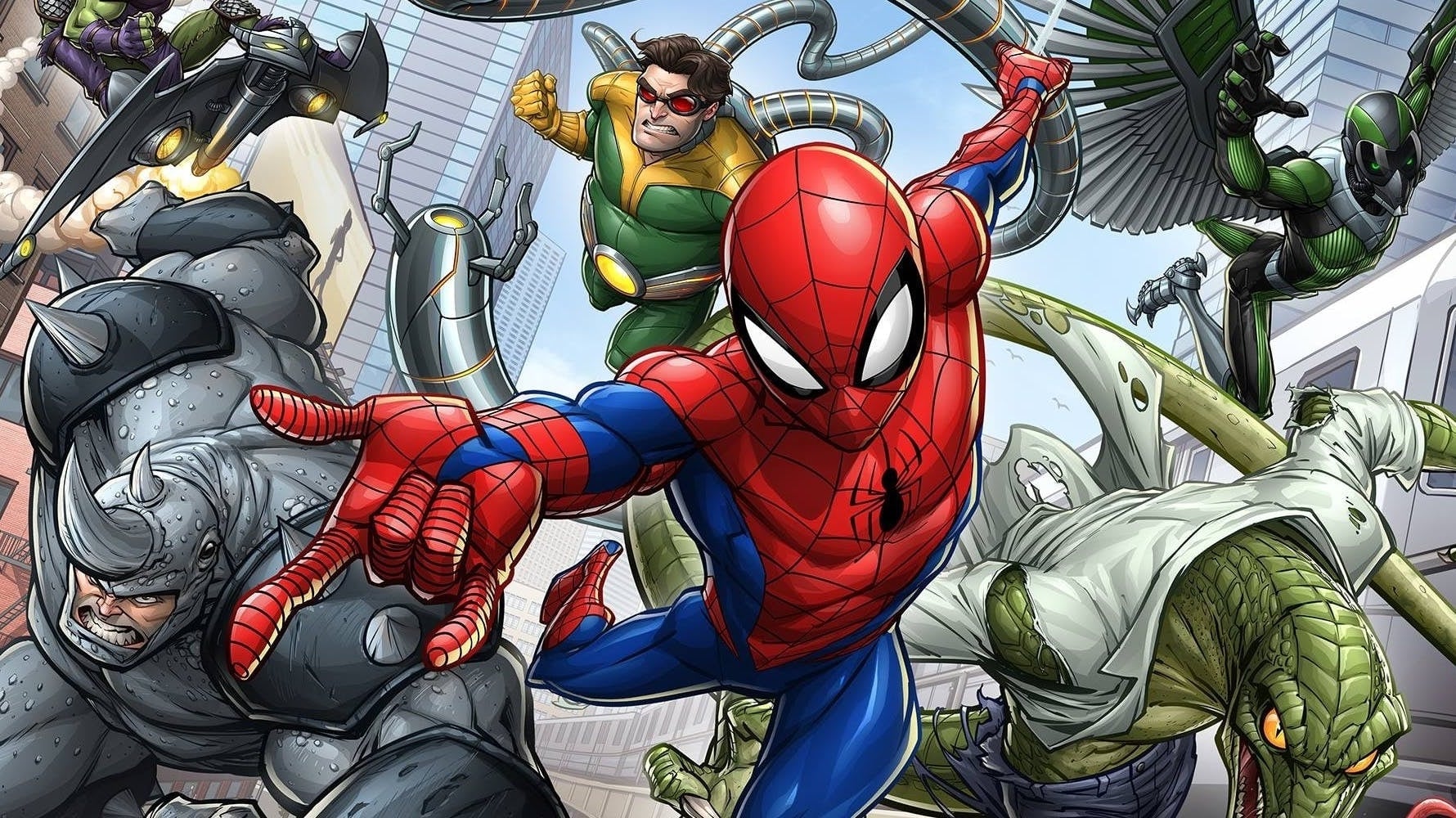
Spider-Man (2017): A Modern Take on the Web-Slinger
Introduction
The 2017 “Spider-Man” animated series brought a fresh perspective to the iconic character, blending elements from various Spider-Man continuities to create a modern, accessible adaptation. Produced by Marvel Animation, this series focused on Peter Parker’s early high school years, exploring his journey from a novice superhero to a more experienced crime-fighter. With its diverse cast, modern sensibilities, and engaging storytelling, the 2017 series offered a unique take on Spider-Man that appealed to both new and longtime fans.
Production Background
Development
- Concept - The series was developed as part of Marvel Animation’s “Marvel’s Spider-Man” initiative, aiming to create a modern adaptation that would appeal to contemporary audiences
- Creative Team - Kevin Shinick (known for “Robot Chicken” and “Mad”) served as the initial showrunner, with Kevin Burke and Chris “Doc” Wyatt taking over in later seasons
- Animation Studio - Animated by Technicolor Animation Productions and other studios
- Air Dates - The series aired from August 19, 2017, to October 25, 2020, for a total of 58 episodes across three seasons
Animation Style
- CGI Animation - The series used CGI animation, a departure from the traditional 2D animation of previous Spider-Man series
- Character Designs - Modern, stylized character designs that blended elements from the comics, films, and other adaptations
- Visual Effects - Impressive visual effects for Spider-Man’s powers, particularly web-slinging and wall-crawling
- Dynamic Camera - Dynamic camera movements that enhanced the sense of action and adventure
Storytelling Approach
Season Structure
- Season 1: Freshman Year - Focuses on Peter Parker’s first year of high school and his early days as Spider-Man
- Season 2: Sophomore Year - Explores Peter’s continued growth as Spider-Man and his relationships with his friends
- Season 3: Junior Year - Features a darker tone and more complex storylines, including the introduction of the symbiote
- Serialized Storytelling - The series features serialized storytelling with ongoing character arcs and plot developments
Notable Story Arcs
- Origin Arc (Season 1) - Explores Peter’s transformation into Spider-Man and his early battles with villains like Vulture and Doctor Octopus
- Osborn Academy Arc (Season 1) - Peter attends the prestigious Osborn Academy for geniuses
- Sinister Six Arc (Season 2) - Doctor Octopus forms the Sinister Six to take down Spider-Man
- Symbiote Arc (Season 3) - Peter bonds with the symbiote, leading to the creation of Venom
- Green Goblin Arc (Seasons 2-3) - Explores the mystery of the Green Goblin’s identity and his connection to Norman Osborn
Modern Elements
- Technology Integration - Peter uses modern technology, including his smartphone and advanced gadgets
- Social Media - Social media plays a role in the series, reflecting its importance in contemporary life
- Diverse Cast - The series features a more diverse cast than previous adaptations
- Contemporary Issues - Addresses contemporary issues like bullying, peer pressure, and social inequality
The Cast of Characters
Peter Parker/Spider-Man
- Characterization - Peter Parker is portrayed as a high school freshman with genius-level intelligence
- Personality - Retains his quick wit and sense of humor, but also shows vulnerability and growth
- Voice Acting - Robbie Daymond provided the voice for both Peter Parker and Spider-Man
- Scientific Inclinations - Emphasizes Peter’s scientific talents more than previous adaptations
Supporting Characters
- Miles Morales - Peter’s classmate and friend, who later gains spider-powers of his own
- Gwen Stacy - Peter’s classmate and love interest, portrayed as a fellow genius
- Anya Corazon - Peter’s classmate who becomes the superhero Spider-Girl
- Harry Osborn - Peter’s friend and Norman Osborn’s son
- Aunt May - Peter’s supportive aunt who runs a soup kitchen
- J. Jonah Jameson - The gruff editor of the Daily Bugle
- Mr. Delmar - The owner of the bodega where Peter works
Villains
- Vulture - The series’ first major villain, a disgruntled inventor
- Doctor Octopus - A brilliant scientist turned criminal mastermind
- Green Goblin - A mysterious villain with a personal connection to Peter
- Electro - A former Oscorp employee with electrical powers
- Rhino - A brute with superhuman strength
- Shocker - A villain with vibro-shock gauntlets
- Venom - The symbiote bonded to various hosts
Themes and Messages
Core Themes
- Responsibility - The classic Spider-Man theme of “with great power comes great responsibility” is central to the series
- Friendship - The importance of friendship and loyalty
- Identity - Peter’s struggle with his dual identity and what it means to be both Peter Parker and Spider-Man
- Growth - Peter’s journey from an inexperienced teenager to a more confident superhero
- Teamwork - The importance of working together to overcome challenges
Subtle Messages
- STEM Education - Emphasizes the importance of science, technology, engineering, and math
- Inclusivity - Promotes inclusivity and acceptance of people from different backgrounds
- Environmental Awareness - Addresses environmental issues in several episodes
- Mental Health - Touches on issues of anxiety and self-doubt
Cultural Context
The 2010s Landscape
- Marvel Cinematic Universe - Aired during the height of the Marvel Cinematic Universe’s popularity, with some characterizations reflecting the films
- Diversity in Media - Part of a trend toward more diverse representation in animated series
- CGI Animation - Reflected the growing popularity of CGI animation in television
Audience Reception
- Critical Reception - Received generally positive reviews, with praise for its animation, storytelling, and diverse cast
- Fan Reaction - Developed a loyal fan base that appreciated its modern take on Spider-Man
- Ratings - Performed well in ratings, particularly among younger viewers
Impact and Legacy
Modern Adaptation
- Updated Mythology - Updated the Spider-Man mythology for contemporary audiences
- Diverse Representation - Set a new standard for diverse representation in Spider-Man adaptations
- Miles Morales’ Introduction - Introduced Miles Morales to a wider audience before his appearance in the Spider-Verse film
Influence on Future Adaptations
- Character Dynamics - Its portrayal of Peter’s relationships with his friends influenced future adaptations
- Modern Sensibilities - Its modern sensibilities helped shape how Spider-Man is portrayed in contemporary media
- Technology Integration - Its integration of modern technology became a staple of subsequent Spider-Man adaptations
Merchandising and Media
- Toys and Games - Spawned a line of toys and video games
- Comic Book Tie-Ins - Had companion comic books
- Digital Content - Included online shorts and other digital content
Comparison to Other Spider-Man Series
vs. The Spectacular Spider-Man
- Animation - Uses CGI animation instead of traditional 2D animation
- Focus - More focused on Peter’s high school experience and friendships
- Tone - Generally more lighthearted, though still capable of dramatic moments
- Supporting Cast - Features a more diverse supporting cast
vs. Ultimate Spider-Man
- Tone - More grounded and less comedic than Ultimate Spider-Man
- Focus - More focused on Peter’s solo adventures rather than team dynamics
- Animation - Uses CGI animation instead of traditional 2D animation
- Storytelling - More serialized and character-driven
Modern Perspective
Critical Reassessment
- Solid Adaptation - Viewed as a solid, enjoyable adaptation that brought Spider-Man into the modern era
- Diversity Praise - Praised for its diverse cast and inclusive storytelling
- Technological Integration - Appreciated for its seamless integration of modern technology
What Made It Unique
- Diverse Cast - Its diverse cast set it apart from previous Spider-Man adaptations
- Modern Setting - Its contemporary setting made it more relatable to younger viewers
- Scientific Focus - Its emphasis on Peter’s scientific talents added a new dimension to the character
- Miles Morales - Its introduction of Miles Morales before the Spider-Verse film helped popularize the character
Enduring Appeal
- Modern Sensibilities - Its modern sensibilities make it more accessible to contemporary audiences
- Engaging Characters - Features well-developed, engaging characters
- Balanced Tone - Balances humor and drama effectively
Conclusion
The 2017 “Spider-Man” animated series successfully brought the iconic character into the modern era, blending elements from various Spider-Man continuities to create a fresh, accessible adaptation. With its diverse cast, modern sensibilities, and engaging storytelling, the series offered a unique take on Spider-Man that appealed to both new and longtime fans.
The series’ legacy includes introducing Miles Morales to a wider audience, setting a new standard for diverse representation in Spider-Man adaptations, and updating the character’s mythology for contemporary audiences. Its use of CGI animation, while controversial among some fans, demonstrated the potential for new animation techniques to bring Spider-Man to life.
While it may not have the cultural impact of the 1967 or 1994 series, the 2017 “Spider-Man” series remains a solid, enjoyable adaptation that helped keep the character relevant for a new generation of fans. Its emphasis on friendship, responsibility, and scientific curiosity made it not just entertaining but also educational, reflecting the best qualities of the Spider-Man character.