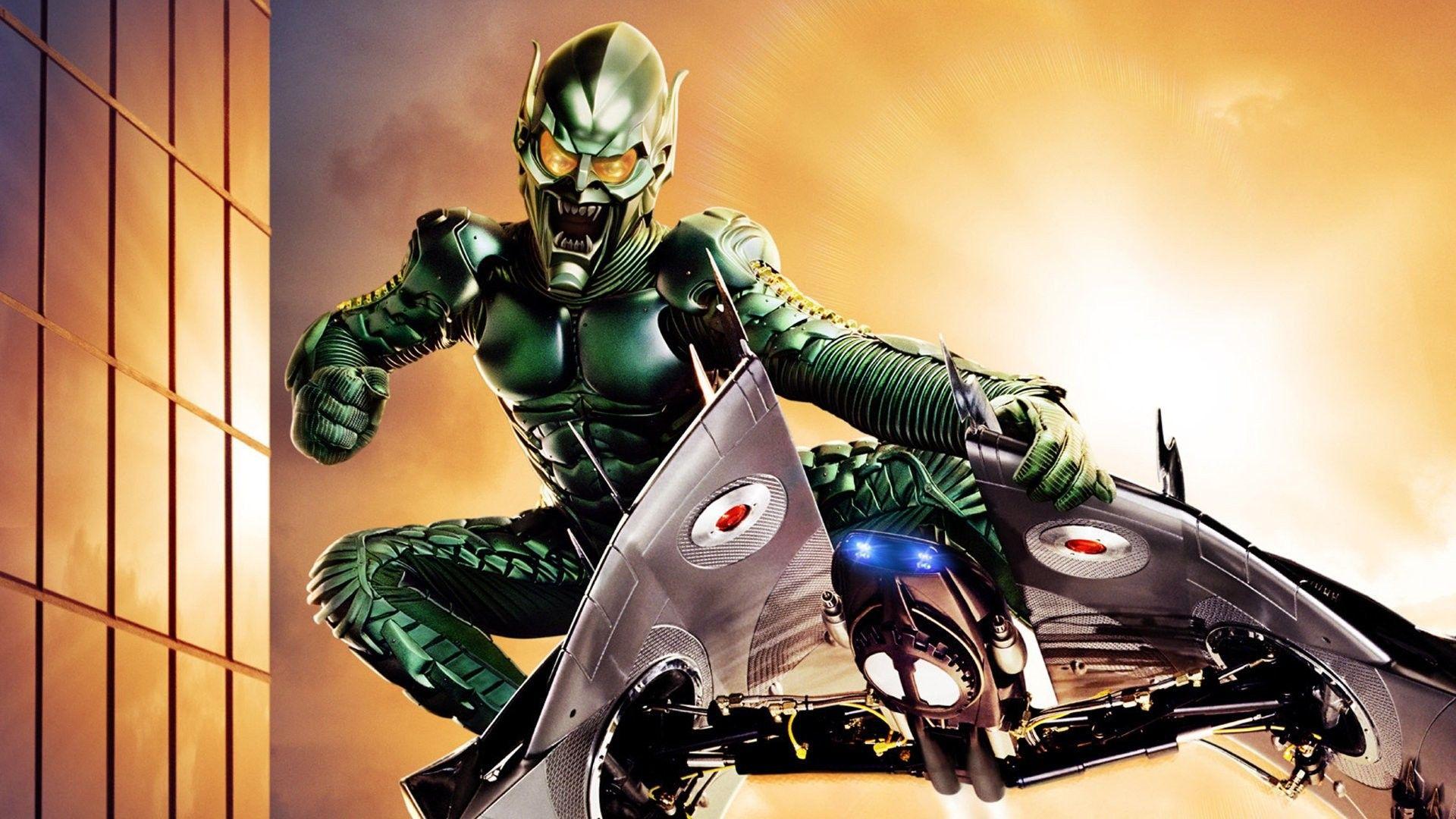
Green Goblin: The Maniacal Mastermind
Introduction
Green Goblin is one of Spider-Man’s most iconic and enduring villains. Created by Stan Lee and Steve Ditko in “The Amazing Spider-Man” #14 (1964), he has evolved from a simple masked villain to a complex character with deep connections to Peter Parker’s life. This analysis examines Green Goblin’s portrayal across Spider-Man animated series, exploring how different adaptations have interpreted his character, relationships, and evolution while highlighting his significance as both a villain and a tragic figure.
The Evolution of Green Goblin
Early Appearances (1960s-1980s)
-
Spider-Man (1967-1970)
- Characterization: Green Goblin makes several appearances in this series
- Portrayal: Primarily depicted as a maniacal villain with a penchant for destruction
- Personality: Simplified portrayal focused on his villainous schemes
- Voice Acting: Len Carlson provided a maniacal voice for Green Goblin
- Significance: Established as one of Spider-Man’s primary villains
-
Spider-Man (1981-1982)
- Characterization: Receives more screen time than in the 1967 series
- Portrayal: Still primarily defined by his villainous schemes, but with slightly more depth
- Personality: Begins to show hints of his dual identity as Norman Osborn
- Voice Acting: Neil Ross provided a more nuanced voice for Green Goblin
- Significance: Remains one of Spider-Man’s most prominent villains
-
Spider-Man and His Amazing Friends (1981-1983)
- Characterization: Makes occasional appearances throughout the series
- Portrayal: Often depicted as a member of the Sinister Six or other villainous teams
- Personality: Shows his maniacal nature and penchant for theatrics
- Significance: Remains a formidable opponent for Spider-Man and his friends
The Definitive Portrayal (1994-1998)
- Spider-Man: The Animated Series (1994-1998)
- Characterization: The most fully developed portrayal of Green Goblin up to that point
- Portrayal: Introduced as Norman Osborn, Harry’s father and a wealthy industrialist, before becoming Green Goblin
- Personality: Shows Norman’s ambition and ruthlessness, and Green Goblin’s maniacal nature
- Voice Acting: Neil Ross delivers a standout performance, capturing both Norman’s sophistication and Green Goblin’s madness
- Significance: Becomes a central villain with deep connections to Peter’s life
Modern Adaptations (2000s-Present)
-
The Spectacular Spider-Man (2008-2009)
- Characterization: One of the most nuanced portrayals of Green Goblin
- Portrayal: Introduced as Norman Osborn, a ruthless industrialist, before becoming Green Goblin
- Personality: Shows Norman’s ambition and coldness, and Green Goblin’s maniacal nature
- Voice Acting: Alan Rachins delivers a standout performance, capturing both Norman’s sophistication and Green Goblin’s madness
- Significance: Becomes a central villain with his own tragic arc
-
Ultimate Spider-Man (2012-2017)
- Characterization: Makes several appearances throughout the series
- Portrayal: Initially depicted as a villain, but later shows hints of his complexity
- Personality: Shows his maniacal nature and his complicated relationship with Harry
- Significance: Remains a formidable opponent for Spider-Man and his team
-
Spider-Man (2017-2020)
- Characterization: Introduced as Norman Osborn, the head of Oscorp
- Portrayal: Emphasizes his ambition and his complicated relationship with Harry
- Personality: Shown as ruthless but with moments of vulnerability
- Voice Acting: Steve Blum provides a modern, nuanced voice for Green Goblin
- Significance: Established early as a major villain with his own development
-
Spider-Man: Into the Spider-Verse (2018)
- Characterization: Makes a brief appearance in this film
- Portrayal: Depicted as a powerful villain from another dimension
- Personality: Shows his maniacal nature and his desire to conquer other dimensions
- Significance: Serves as a formidable opponent for the Spider-Verse heroes
-
Spider-Man: Freshman Year (2024-Present)
- Characterization: Reimagined as Norman Osborn, a wealthy industrialist and Harry’s father
- Portrayal: Emphasizes his ambition and his complicated relationship with Harry
- Personality: Shown as charismatic but ruthless
- Voice Acting: Robin Atkin Downes provides a fresh take on Green Goblin
- Significance: Established early as a character with potential for future development
Core Personality Traits
Norman Osborn
Norman Osborn’s character is defined by several key traits that remain consistent across adaptations:
- Ambition - Norman is typically portrayed as extremely ambitious, often to the point of ruthlessness
- Intelligence - He is a brilliant businessman and scientist
- Ruthlessness - He is willing to do whatever it takes to achieve his goals
- Control Freak - He has a strong desire to control those around him, particularly his son Harry
- Tragedy - His transformation into Green Goblin is typically portrayed as a tragic fall from grace
Green Goblin
Green Goblin’s character is defined by several key traits that remain consistent across adaptations:
- Maniacal - Green Goblin is often portrayed as maniacal and unpredictable
- Theatrical - He has a penchant for theatrics and dramatic displays
- Sadistic - He takes pleasure in tormenting Spider-Man, both physically and psychologically
- Power-Hungry - He craves power and control, often on a grand scale
- Unpredictable - His actions are often unpredictable, making him a particularly dangerous foe
The Origin Story
Across all animated adaptations, certain elements of Green Goblin’s origin remain consistent:
- The Formula - Norman Osborn is involved in the creation of a performance-enhancing formula
- The Accident - Norman is exposed to the formula, which enhances his strength but drives him insane
- The Transformation - The formula transforms him into Green Goblin, a maniacal villain with superhuman abilities
- The Motivation - His motivations often include power, control, and a personal vendetta against Spider-Man
Variations in the Origin
Different adaptations have introduced variations to Green Goblin’s origin:
- The Purpose of the Formula - The purpose of the formula varies, from a military super-soldier serum to a personal performance enhancer
- The Mental Effects - The extent to which the formula affects his mental state varies across adaptations
- The Timeline - The timing of his transformation relative to Spider-Man’s origin varies
- The Aftermath - The immediate aftermath of the accident and his transformation into Green Goblin is depicted differently
The Equipment
The Goblin Glider
Green Goblin’s glider is a defining characteristic of his character:
- Design - The glider is typically portrayed as a bat-shaped vehicle with various capabilities
- Function - It allows him to fly and maneuver with great agility
- Weaponry - The glider often features various weapons, including missiles, lasers, and other devices
- Symbolism - The glider serves as a symbol of Green Goblin’s theatrical nature and his ability to strike from above
Other Equipment
Green Goblin also uses a variety of other equipment:
- Pumpkin Bombs - Explosive devices shaped like pumpkins
- Goblin Gas - A hallucinogenic gas that induces fear in his opponents
- Razor Bats - Sharp, bat-shaped throwing weapons
- Other Gadgets - Various other gadgets and weapons, including blasters and force fields
Relationship with Spider-Man
Dynamic
- Personal Connection - Green Goblin often has a personal connection to Peter Parker, either through his relationship with Harry or through his business dealings
- Psychological Warfare - He often uses psychological warfare against Spider-Man, targeting those he cares about
- Rivalry - Their conflict is often portrayed as a personal rivalry, with each seeing the other as their greatest opponent
- Mutual Obsession - There is often a mutual obsession between Green Goblin and Spider-Man
Evolution of the Relationship
- Early Adaptations: Primarily focused on their physical conflict
- 1994 Series: Explores the psychological and personal aspects of their relationship
- Modern Adaptations: Show a more complex relationship with moments of both conflict and psychological depth
Notable Encounters
- First Meeting: Their first encounter is often portrayed as a defining moment for both characters
- Revealing the Secret Identity: In some adaptations, Green Goblin discovers Spider-Man’s secret identity
- Targeting Loved Ones: Green Goblin often targets those close to Spider-Man, particularly Mary Jane and Aunt May
- Final Battles: Their final battles are often portrayed as epic clashes with high stakes
Relationship with Harry Osborn
Father-Son Dynamic
- Norman’s Expectations - Norman often has high expectations for Harry, which he struggles to meet
- Harry’s Insecurities - Harry’s insecurities are often rooted in his relationship with his father
- The Secret - Harry’s discovery of his father’s secret identity as Green Goblin is often a pivotal moment
- The Legacy - Harry often struggles with the legacy of his father’s villainy
Variations in the Relationship
Different adaptations have explored different aspects of the relationship between Norman and Harry:
- The Nature of Norman’s Love - The extent to which Norman genuinely loves Harry varies across adaptations
- Harry’s Reaction - Harry’s reaction to discovering his father’s secret varies, from denial to acceptance
- The Aftermath - The aftermath of Norman’s transformation and eventual death varies across adaptations
- Harry’s Transformation - In some adaptations, Harry himself becomes Green Goblin after his father’s death
Cultural Impact and Legacy
The Classic Villain
- Iconic Status - Green Goblin is widely regarded as one of Spider-Man’s most iconic villains
- Symbolism - His costume and equipment have become iconic symbols of villainy in the Spider-Man mythos
- Influence - His portrayal has influenced subsequent villain characters in popular culture
- Relevance - His character continues to resonate with audiences, reflecting our fascination with the duality of human nature
Influence on Other Media
-
Comic Books
- Animated portrayals have influenced how Green Goblin is depicted in comics
- The depth of his character in animation has led to more complex portrayals in comics
-
Live-Action Films
- Elements of his animated portrayals have been adapted in live-action films
- His character was featured in “Spider-Man” (2002) and “The Amazing Spider-Man 2” (2014)
- Willem Dafoe’s portrayal in “Spider-Man” (2002) drew inspiration from the 1994 animated series
-
Video Games
- Green Goblin has appeared in numerous Spider-Man video games, often drawing inspiration from his animated portrayals
- He is often a final boss or a major antagonist
Fan Engagement
- Popularity - Green Goblin consistently ranks among Spider-Man’s most popular villains
- Fan Works - He has inspired numerous fan works, including art, fiction, and cosplay
- Merchandise - He is a popular character for merchandise, including action figures and other collectibles
- Recognition - He is widely recognized as one of the greatest comic book villains of all time
Voice Acting Legacy
Notable Voice Actors
- Len Carlson (1967-1970) - Provided the first voice for Green Goblin, establishing his maniacal tone
- Neil Ross (1981-1982, 1994-1998) - Delivered a nuanced performance, capturing both Norman’s sophistication and Green Goblin’s madness
- Alan Rachins (2008-2009) - Provided a standout performance as both Norman Osborn and Green Goblin
- Steve Blum (2017-2020) - Delivered a modern take on Green Goblin
- Robin Atkin Downes (2024-Present) - Provides a fresh interpretation of the character
Impact of Voice Acting
- Character Identity: For many fans, the voice actors’ performances define their perception of Green Goblin
- Dual Performance: Voice actors must often portray both Norman Osborn and Green Goblin, requiring a range of vocal techniques
- Consistency: Despite different interpretations, certain vocal qualities remain consistent, such as Green Goblin’s maniacal laugh
- Evolution: The voice acting reflects the evolution of Green Goblin’s character over time, from simple villain to complex tragic figure
Conclusion
Green Goblin has evolved significantly across Spider-Man animated series, transforming from a simple masked villain to one of Spider-Man’s most complex and tragic adversaries. His journey reflects broader changes in how villains are portrayed in superhero media, as he has grown to become a fully realized character with his own motivations, complexities, and tragic elements.
What makes Green Goblin so compelling is his combination of maniacal villainy and tragic backstory. He is not simply a villain; he is a man who is undone by his own ambition and the consequences of his actions. His personal connection to Peter Parker through his son Harry adds an extra layer of complexity to their conflict, making their battles more than just physical confrontations.
As Spider-Man animated series continue to evolve, Green Goblin’s character will undoubtedly continue to develop, reflecting changing cultural attitudes and storytelling trends. However, the core elements that make him so compelling—his maniacal nature, his tragic backstory, and his personal connection to Peter Parker—will likely remain constant, ensuring his place as one of the most iconic villains in the Spider-Man mythos.
Green Goblin is proof that villains in superhero stories can be more than just obstacles for the hero; they can be complex, tragic figures with their own hopes, fears, and motivations, whose stories can be just as compelling as those of the heroes they oppose. His character serves as a reminder of the fine line between genius and madness, and the potential dangers of unchecked ambition.