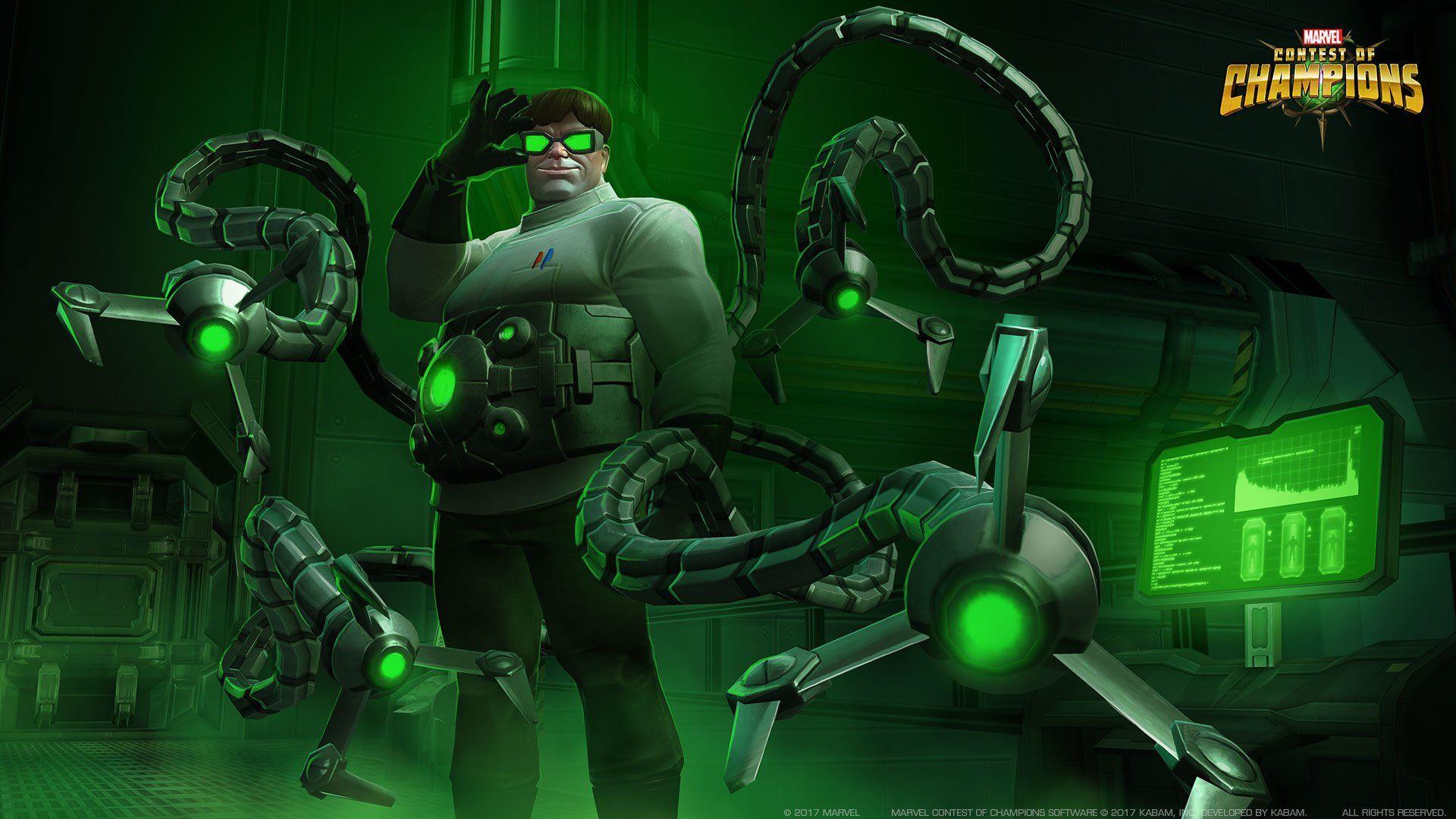
Doctor Octopus: The Brilliant Mad Scientist
Introduction
Doctor Octopus, also known as Otto Octavius, is one of Spider-Man’s most iconic and enduring villains. Created by Stan Lee and Steve Ditko in “The Amazing Spider-Man” #3 (1963), he has evolved from a relatively simple mad scientist to one of Spider-Man’s most complex and formidable adversaries. This analysis examines Doctor Octopus’s portrayal across Spider-Man animated series, exploring how different adaptations have interpreted his character, motivations, and relationship with Spider-Man while highlighting his significance as a villain.
The Evolution of Doctor Octopus
The Early Years (1960s-1980s)
-
Spider-Man (1967-1970)
- Characterization: Doctor Octopus makes several appearances in this series
- Portrayal: Primarily depicted as a classic mad scientist bent on world domination
- Personality: Simplified portrayal focused on his villainous schemes
- Voice Acting: Tom Harvey provided a deep, menacing voice for Doctor Octopus
- Significance: Established as one of Spider-Man’s primary villains
-
Spider-Man (1981-1982)
- Characterization: Receives more screen time than in the 1967 series
- Portrayal: Still primarily defined by his villainous schemes, but with slightly more depth
- Personality: Begins to show hints of his brilliance and tragic backstory
- Voice Acting: Michael Rye provided a more nuanced voice for Doctor Octopus
- Significance: Remains one of Spider-Man’s most prominent villains
-
Spider-Man and His Amazing Friends (1981-1983)
- Characterization: Makes occasional appearances throughout the series
- Portrayal: Often depicted as a member of the Sinister Six or other villainous teams
- Personality: Shows his intelligence and disdain for Spider-Man
- Significance: Remains a formidable opponent for Spider-Man and his friends
The Definitive Portrayal (1994-1998)
- Spider-Man: The Animated Series (1994-1998)
- Characterization: The most fully developed portrayal of Doctor Octopus up to that point
- Portrayal: Evolves from a brilliant scientist to a formidable supervillain
- Personality: Complex and multifaceted, showing both his brilliance and his descent into madness
- Voice Acting: Efrem Zimbalist Jr. delivers a career-defining performance, capturing Doctor Octopus’s intelligence, arrogance, and tragedy
- Significance: Becomes a central villain with his own storylines and development
Modern Adaptations (2000s-Present)
-
The Spectacular Spider-Man (2008-2009)
- Characterization: One of the most nuanced portrayals of Doctor Octopus
- Portrayal: Introduced as a brilliant scientist who becomes corrupted by his own creation
- Personality: Shows his brilliance, ambition, and eventual descent into villainy
- Voice Acting: Peter MacNicol delivers a standout performance, capturing Doctor Octopus’s intelligence and growing madness
- Significance: Becomes a central villain with a tragic backstory
-
Ultimate Spider-Man (2012-2017)
- Characterization: Makes occasional appearances throughout the series
- Portrayal: Often depicted as a member of the Sinister Six
- Personality: Shows his intelligence and disdain for Spider-Man
- Significance: Remains a formidable opponent for Spider-Man and his team
-
Spider-Man (2017-2020)
- Characterization: Introduced as a brilliant scientist working for Oscorp
- Portrayal: Emphasizes his brilliance and his complicated relationship with Norman Osborn
- Personality: Shown as arrogant but with moments of vulnerability
- Voice Acting: Scott Menville provides a modern, nuanced voice for Doctor Octopus
- Significance: Established early as a major villain with his own development
-
Spider-Man: Freshman Year (2024-Present)
- Characterization: Reimagined as a brilliant scientist just starting his career
- Portrayal: Emphasizes his brilliance and ambition before his transformation
- Personality: Shown as focused, arrogant, and slightly eccentric
- Voice Acting: Jeff Bennett provides a fresh take on Doctor Octopus
- Significance: Established early as a character with potential for future development
Core Personality Traits
Consistent Traits Across Adaptations
Doctor Octopus’s character is defined by several key traits that remain consistent across adaptations:
- Brilliance - Doctor Octopus is universally portrayed as a genius-level intellect, particularly in the fields of physics and engineering
- Arrogance - His intelligence often leads to arrogance and a disdain for those he considers intellectually inferior
- Ambition - He has grand ambitions, often involving scientific advancement or world domination
- Ruthlessness - He is willing to do whatever it takes to achieve his goals, regardless of the consequences
- Tragedy - There is often a tragic element to his character, stemming from his transformation or past failures
Evolving Traits
As Doctor Octopus’s character has evolved, certain traits have been emphasized or expanded upon:
- Complexity - Modern adaptations often highlight the complexity of his character and motivations
- Scientific Idealism - Recent portrayals emphasize his genuine desire to advance science, even if his methods are unethical
- Moral Ambiguity - Some adaptations explore his moral struggles more deeply
- Respect for Spider-Man - Some adaptations show a grudging respect between Doctor Octopus and Spider-Man
The Origin Story
Across all animated adaptations, certain elements of Doctor Octopus’s origin remain consistent:
- The Accident - Otto Octavius is involved in a laboratory accident that fuses his mechanical arms to his body
- The Transformation - The accident not only physically transforms him but also affects his mental state
- The Motivations - His motivations often include scientific advancement, personal gain, or revenge
- The Conflict - He comes into conflict with Spider-Man, who opposes his villainous schemes
Variations in the Origin
Different adaptations have introduced variations to Doctor Octopus’s origin:
- The Cause of the Accident - The cause of the accident varies from simple laboratory error to sabotage
- The Mental Effects - The extent to which the accident affects his mental state varies across adaptations
- The Timeline - The timing of his transformation relative to Spider-Man’s origin varies
- The Aftermath - The immediate aftermath of the accident and his transformation into Doctor Octopus is depicted differently
The Mechanical Arms
Design and Function
Doctor Octopus’s mechanical arms are a defining characteristic of his character:
- Design - The arms are typically portrayed as metallic tentacles with various capabilities
- Function - They provide him with superhuman strength, dexterity, and versatility
- Control - He controls the arms through a mental link, often enhanced by the accident
- Weaponry - The arms often feature various weapons and tools, including lasers, grapplers, and other devices
Symbolism
The mechanical arms also serve as a powerful symbol:
- Extension of Self - The arms are often portrayed as an extension of Doctor Octopus’s own body and personality
- Isolation - They physically separate him from other people, symbolizing his emotional isolation
- Power - They represent the power he wields and the danger he poses
- Obsession - They symbolize his obsession with his work and his inability to let go
Relationship with Spider-Man
Dynamic
- Intellectual Foes - Doctor Octopus is often portrayed as Spider-Man’s intellectual equal or superior
- Respect - There is often a grudging respect between the two characters
- Conflict - Their conflict is typically portrayed as more than just physical; it’s also a battle of wits
- Mirror Images - Some adaptations suggest that Doctor Octopus represents what Spider-Man could become if he let his intelligence and ambition consume him
Evolution of the Relationship
- Early Adaptations: Primarily focused on their physical conflict
- 1994 Series: Explored the psychological and intellectual aspects of their relationship
- Modern Adaptations: Show a more complex relationship with moments of both conflict and reluctant respect
Notable Encounters
- First Meeting: Their first encounter is often portrayed as a defining moment for both characters
- Team-Ups: In some adaptations, they temporarily team up to face a greater threat
- Final Battles: Their final battles are often portrayed as epic clashes of wills and abilities
- Redemption: Some adaptations show Doctor Octopus seeking or achieving redemption
Motivations and Goals
Primary Motivations
Doctor Octopus’s motivations typically fall into several categories:
- Scientific Advancement - He often seeks to advance science, even if his methods are unethical
- Power and Control - He frequently desires power and control over others
- Revenge - He sometimes seeks revenge against those he perceives as having wronged him
- Recognition - He craves recognition for his scientific achievements
Evolving Motivations
As Doctor Octopus’s character has evolved, his motivations have become more complex:
- Idealism - Modern adaptations often show his genuine desire to make the world a better place through science
- Personal Redemption - Some adaptations explore his desire to redeem past failures
- Survival - In some adaptations, his actions are driven by a desire to survive
- Legacy - He sometimes seeks to leave a lasting legacy through his scientific work
Cultural Impact and Legacy
The Mad Scientist Trope
- Subversion - Doctor Octopus both embodies and subverts the classic mad scientist trope
- Depth - Unlike many mad scientists, Doctor Octopus often has complex motivations and a tragic backstory
- Influence - His portrayal has influenced subsequent mad scientist characters in popular culture
- Relevance - His character continues to resonate with audiences, reflecting our fascination with science and its potential dangers
Influence on Other Media
-
Comic Books
- Animated portrayals have influenced how Doctor Octopus is depicted in comics
- The depth of his character in animation has led to more complex portrayals in comics
-
Live-Action Films
- Elements of his animated portrayals have been adapted in live-action films
- His character was featured in “Spider-Man 2” (2004), which drew inspiration from the 1994 animated series
- His portrayal in “Spider-Man 2” is widely regarded as one of the best superhero film villains
-
Video Games
- Doctor Octopus has appeared in numerous Spider-Man video games, often drawing inspiration from his animated portrayals
- His mechanical arms make him a unique and challenging opponent in gameplay
Fan Engagement
- Popularity - Doctor Octopus consistently ranks among Spider-Man’s most popular villains
- Fan Works - He has inspired numerous fan works, including art, fiction, and cosplay
- Merchandise - He is a popular character for merchandise, including action figures and other collectibles
- Recognition - He is widely recognized as one of the greatest comic book villains of all time
Voice Acting Legacy
Notable Voice Actors
- Tom Harvey (1967-1970) - Provided the first voice for Doctor Octopus, establishing his menacing tone
- Michael Rye (1981-1982) - Brought more depth to the character
- Efrem Zimbalist Jr. (1994-1998) - Delivered the definitive portrayal of Doctor Octopus, capturing his intelligence, arrogance, and tragedy
- Peter MacNicol (2008-2009) - Provided a nuanced performance that emphasized Doctor Octopus’s brilliance and descent into madness
- Scott Menville (2017-2020) - Delivered a modern take on Doctor Octopus
- Jeff Bennett (2024-Present) - Provides a fresh interpretation of the character
Impact of Voice Acting
- Character Identity: For many fans, the voice actors’ performances define their perception of Doctor Octopus
- Emotional Connection: The voice actors’ performances help fans connect with Doctor Octopus on an emotional level, even as he commits villainous acts
- Consistency: Despite different interpretations, certain vocal qualities remain consistent, such as Doctor Octopus’s intelligence and arrogance
- Evolution: The voice acting reflects the evolution of Doctor Octopus’s character over time, from simple mad scientist to complex villain
Conclusion
Doctor Octopus has evolved significantly across Spider-Man animated series, transforming from a simple mad scientist to one of Spider-Man’s most complex and formidable adversaries. His journey reflects broader changes in how villains are portrayed in superhero media, as he has grown to become a fully realized character with his own motivations, complexities, and tragic elements.
What makes Doctor Octopus so compelling is his combination of brilliance, ambition, and tragedy. He is not simply a villain; he is a brilliant scientist who is undone by his own ambition and the consequences of his actions. His conflict with Spider-Man is not just a physical battle but a clash of ideologies and wills.
As Spider-Man animated series continue to evolve, Doctor Octopus’s character will undoubtedly continue to develop, reflecting changing cultural attitudes and storytelling trends. However, the core elements that make him so compelling—his brilliance, arrogance, ambition, and tragedy—will likely remain constant, ensuring his place as one of the most iconic villains in the Spider-Man mythos.
Doctor Octopus is proof that villains in superhero stories can be more than just obstacles for the hero; they can be complex, tragic figures with their own motivations and struggles, whose stories can be just as compelling as those of the heroes they oppose. His character serves as a reminder of the fine line between genius and madness, and the potential dangers of unchecked ambition.